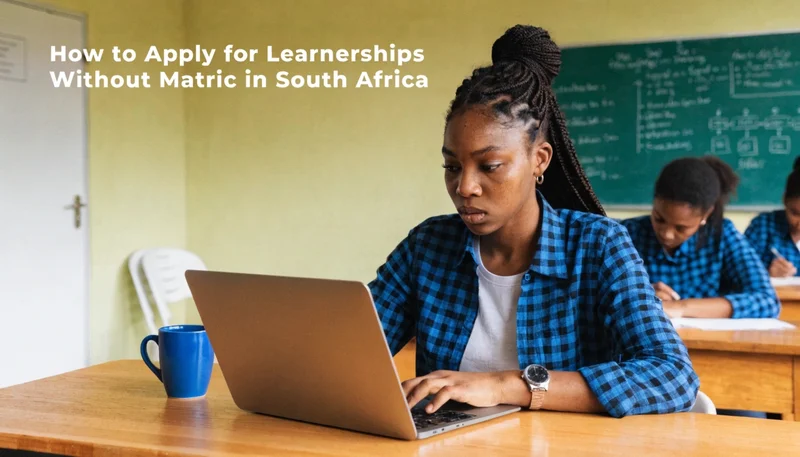
dIf you don’t have matric in South Africa, it can feel like most job doors are closed. But the reality is very different. Thousands of learnerships are offered every year specifically for people who only have Grade 9, 10, or 11.
The problem is not a lack of opportunities — it’s knowing where to find them and how to apply correctly.
This guide will show you exactly how to apply for learnerships without matric in South Africa, where to find real opportunities, which companies to target, and what mistakes to avoid so you don’t get rejected unnecessarily.
What Is a Learnership (And Why It Matters If You Don’t Have Matric)?
A learnership is a structured training programme that combines:
- Theoretical classroom learning
- Practical work experience in a real job environment
At the end of the programme, you receive a nationally recognised qualification registered on the NQF (National Qualifications Framework).
Most importantly, learnerships are one of the few pathways in South Africa where you can:
- Start working without matric
- Gain experience while studying
- Earn a monthly stipend in many cases
This makes learnerships one of the most important entry points into the job market for young people.
Can You Really Apply for Learnerships Without Matric?
Yes — and this is where many people get confused.
Not all learnerships require matric. In fact, many entry-level programmes only require:
- Grade 9, Grade 10, or Grade 11
- Basic literacy and numeracy skills
- South African ID
These are usually NQF Level 1 to Level 3 learnerships.
Typical requirement breakdown:
- NQF Level 1–2: Grade 9 or 10
- NQF Level 3: Grade 11
- NQF Level 4+: Usually matric required
So if you didn’t finish matric, you are still eligible for entry-level programmes — especially in service, retail, cleaning, agriculture, and security sectors.
Best Learnership Fields You Can Apply for Without Matric
Here are the most common industries offering opportunities for candidates without matric in South Africa:
1. Retail and Customer Service
Large retailers often train entry-level workers for:
- Cashier roles
- Shop assistant positions
- Customer service support
These programmes focus on communication, teamwork, and basic sales skills.
2. Security Industry
Security companies frequently offer learnerships such as:
- Security officer training
- Control room operations
These are very popular because they don’t always require matric at entry level.
3. Cleaning and Facilities Management
You can find learnerships in:
- Industrial cleaning
- Hospital cleaning services
- Hygiene and sanitation training
These programmes are often offered through service companies and government contracts.
4. Hospitality and Tourism
This includes:
- Hotel housekeeping training
- Food service assistance
- Basic hospitality operations
Ideal for people who enjoy working with customers and in fast-paced environments.
5. Agriculture and Farming
Rural and semi-rural programmes often include:
- Crop production training
- Animal care basics
- Farm assistant learnerships
These are often overlooked but provide real long-term skills.
Where to Find Learnerships Without Matric in South Africa
Finding opportunities is the most important step. Many people fail because they only search in one place.
Here are the best sources:
1. SETA Websites
Sector Education and Training Authorities (SETAs) are the main providers of learnerships in South Africa.
Examples include:
- Services SETA
- HWSETA (Health and Welfare)
- TETA (Transport Sector)
- AgriSETA (Agriculture)
Each SETA posts funded learnership opportunities regularly.
2. Company Career Pages
Many large companies recruit directly:
- Retail chains
- Security companies
- Logistics firms
- Cleaning service providers
Always check the “Careers” section of company websites.
3. Job Portals
Search using keywords like:
- “Learnership Grade 10 South Africa”
- “Learnerships without matric 2026”
- “Entry level learnership South Africa”
4. TVET Colleges and Training Providers
Some learnerships are advertised through TVET colleges and partner institutions.
Step-by-Step: How to Apply for Learnerships Without Matric
Step 1: Prepare Your Documents
Before applying, make sure you have:
- Certified copy of your ID
- Latest school report (Grade 9–11)
- Updated CV
- Proof of residence
Missing documents is one of the main reasons applications are rejected.
Step 2: Write a Simple but Strong CV
Even without experience, your CV should include:
- Personal details
- Education level
- Basic skills (communication, teamwork, reliability)
Keep it clean and professional — avoid unnecessary information.
Step 3: Apply to Multiple Learnerships
This is where most applicants fail.
Do not apply to just 1 or 2 opportunities.
Successful applicants typically apply to 10–20 learnerships at once to increase their chances.
Step 4: Submit Applications Correctly
Always:
- Follow instructions exactly
- Use the correct email subject line
- Attach all documents
- Apply before the closing date
Small mistakes can lead to automatic rejection.
Step 5: Prepare for Interviews or Tests
If shortlisted, you may be asked:
- Basic literacy or numeracy questions
- A short interview
Be ready to explain:
- Why you want the learnership
- What skills you bring
- Your long-term goals
Common Mistakes That Cause Rejection
Many applicants are rejected not because they are unqualified, but because of avoidable mistakes:
1. Missing documents
No certified ID or school report = instant rejection.
2. Poor CV structure
Unclear or messy CVs reduce your chances immediately.
3. Ignoring instructions
If they say “email only,” do not apply in person.
4. Applying late
Many learnerships close early due to high demand.
Do Learnerships Pay You?
Yes — many learnerships offer a monthly stipend, although the amount varies depending on the programme and industry.
The stipend is not a salary, but it helps cover:
- Transport
- Food
- Basic personal expenses
What Happens After You Complete a Learnership?
After completing a learnership, you can:
- Apply for permanent jobs
- Continue to higher-level learnerships
- Enrol at a TVET college or training institution
- Build experience for better opportunities
A learnership is often the first step into long-term employment.
Final Thoughts
Not having matric does not mean you are excluded from the job market in South Africa. Learnerships are designed specifically to create opportunities for people who are starting from scratch.
The key is not just applying — it’s applying correctly, consistently, and to the right places.
If you take action, prepare your documents properly, and apply widely, you significantly increase your chances of getting accepted into a learnership that can change your career path.