If you are looking for a career path that does not require a university degree but still offers strong earning potential, skilled trades are one of the best options in South Africa. Apprenticeships allow you to earn while you learn, combining hands-on workplace training with technical study. The result is a qualified artisan in high demand across construction, mining, manufacturing, and energy sectors.
What makes trades especially attractive is that many of them have low entry requirements, paid training, and high long-term earning potential once qualified. In South Africa, experienced artisans can often earn far more than entry-level office workers, especially in shortage skills fields.
Below are the highest paying apprenticeship trades in South Africa and why they are worth considering.
1. Electrician Apprenticeship
Electricians are consistently among the highest paid trades in South Africa. They work with electrical systems in homes, factories, mines, and increasingly in renewable energy projects like solar installations.
During apprenticeship, earnings may start modestly, but the long-term potential is very strong. Once qualified, electricians often move into high-paying industrial or self-employment work.
In South Africa, qualified electricians can earn around R18,000 to R35,000 per month, while experienced or self-employed electricians can earn significantly more depending on contracts and projects.
Apprenticeship benefits:
- High demand across all industries
- Strong opportunities in solar and construction
- Ability to start your own business later
2. Boilermaker Apprenticeship
Boilermakers specialise in building and repairing metal structures such as boilers, tanks, and heavy industrial equipment. This is one of the most respected trades in mining and manufacturing.
Because of the physical and technical skill required, boilermakers are often well rewarded once qualified. Experienced artisans can earn R24,000 to R60,000+ per month depending on experience and industry.
Apprenticeship benefits:
- Strong mining and industrial demand
- High overtime earning potential
- Opportunities for offshore and remote work
3. Plumber Apprenticeship
Plumbers are always in demand because water systems, sanitation, and infrastructure need constant installation and repair. In South Africa, urban development and ageing infrastructure keep plumbers busy year-round.
Qualified plumbers typically earn between R16,000 and R38,000 per month, with experienced or self-employed plumbers earning even more.
Apprenticeship benefits:
- High demand in residential and commercial sectors
- Easy path to self-employment
- Strong emergency service income potential
4. Millwright Apprenticeship
Millwrights are highly skilled technicians who install, maintain, and repair industrial machinery. This trade combines mechanical, electrical, and automation skills, making it one of the most versatile and well-paid technical careers.
Millwrights are essential in factories, mining plants, and manufacturing industries where downtime is very costly.
Apprenticeship benefits:
- Very high technical skill level = high pay
- Strong industrial and manufacturing demand
- Opportunities in automation and robotics
5. Diesel Mechanic Apprenticeship
Diesel mechanics work on heavy-duty engines used in trucks, construction equipment, buses, and mining machinery. Because transport and mining are critical industries in South Africa, diesel mechanics are always needed.
Once qualified, diesel mechanics can earn strong salaries, especially in mining and fleet maintenance environments.
Apprenticeship benefits:
- High demand in logistics and mining
- Opportunities to work internationally
- Good overtime earning potential
6. Welder Apprenticeship
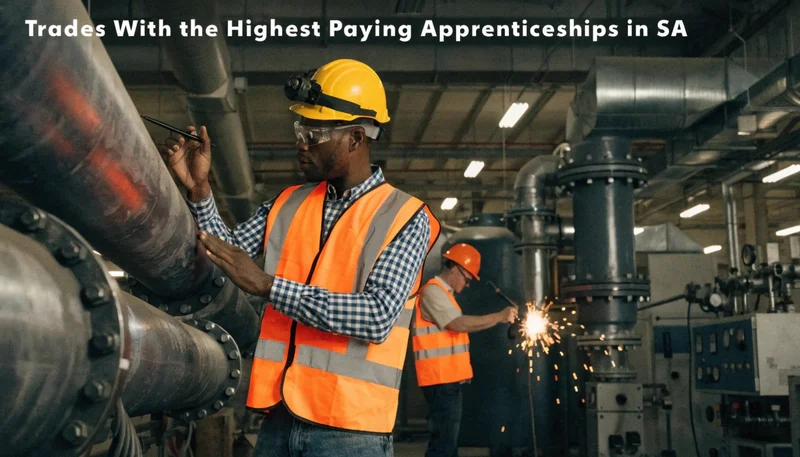
Welding is one of the most flexible and globally recognised trades. Welders work in construction, shipbuilding, pipelines, and manufacturing.
Specialised welding (such as pipeline or industrial welding) can be very lucrative. Experienced welders can earn high incomes, especially when working on contract or remote projects.
Apprenticeship benefits:
- Wide range of industries
- Travel and offshore opportunities
- High pay for specialised skills
7. HVAC / Refrigeration Technician Apprenticeship
HVAC (Heating, Ventilation, Air Conditioning) and refrigeration technicians install and maintain cooling systems in buildings, supermarkets, hospitals, and industrial sites.
As climate control becomes more important in commercial and residential spaces, demand for these technicians continues to grow.
Apprenticeship benefits:
- Growing demand in urban development
- Stable long-term career
- Strong private sector opportunities
Why Apprenticeships Are Worth It in South Africa
One of the biggest advantages of trade apprenticeships is that you are not paying large university fees while studying. Instead, you earn a stipend while gaining experience.
In many programmes, apprentices in South Africa earn between R2,500 and R8,000 per month during training, depending on the employer and SETA funding.
Once qualified, however, income increases significantly as you gain experience and certification.
Other key advantages include:
- Job security due to skills shortages
- Ability to start your own business
- High demand in construction, mining, and energy sectors
- No student debt compared to university education
Which Trade Pays the Most?
In general, the highest earning trades in South Africa tend to be:
- Electricians (especially industrial and solar work)
- Boilermakers
- Millwrights
- Diesel mechanics in mining
- Specialist welders
However, earnings often depend more on experience, location, and whether you work for a company or independently than the trade itself.
Final Thoughts
If you are considering a practical career path, apprenticeships in South Africa offer a powerful way to build financial stability without needing a university degree. Trades like electrical work, boilermaking, plumbing, and mechanical services continue to be in high demand and offer strong long-term income potential.
The key is to choose a trade that matches your interests and commit to building experience. Once qualified, these careers can open doors to stable employment, entrepreneurship, and even international opportunities.